Where the Money Goes Wrong: A Smarter Framework for Allocating Your Luxury Bathroom Budget
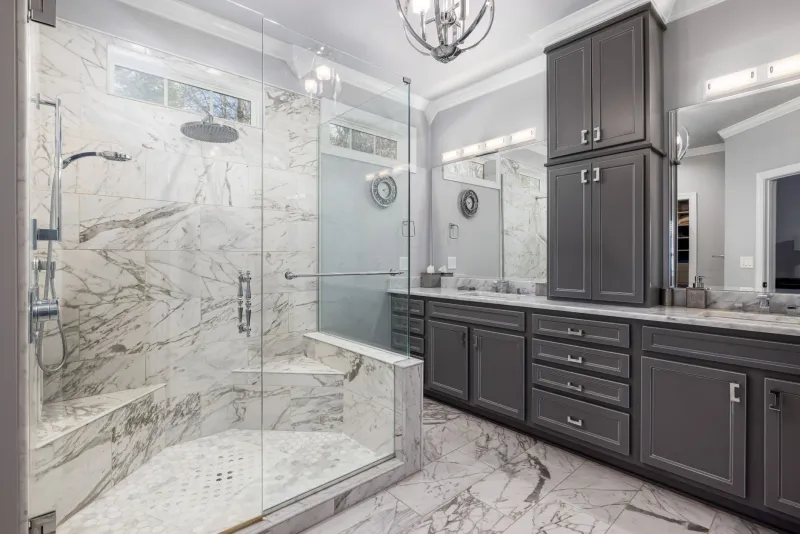
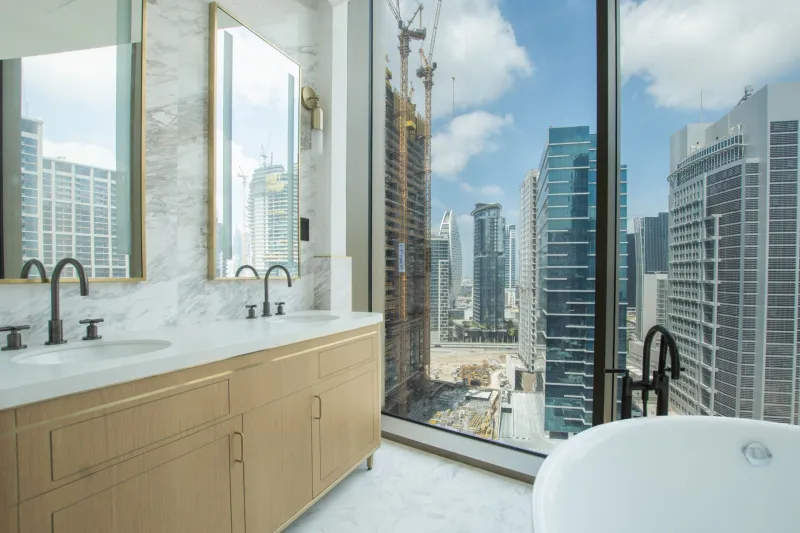
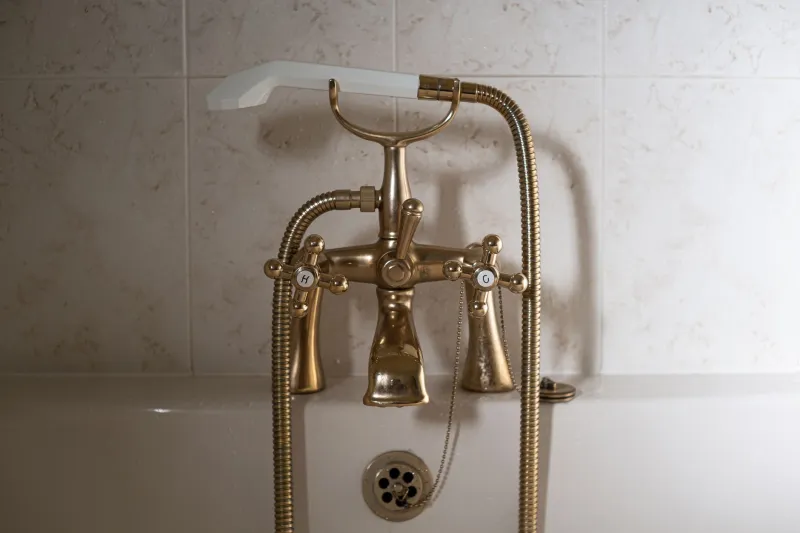
There is a persistent myth in the world of luxury renovation: that premium materials, by virtue of their cost alone, will deliver a premium outcome. Walk into any high-end showroom, and it is easy to understand how the myth takes hold. The slabs of book-matched marble are breathtaking. The freestanding soaking tubs command the room. The brushed unlacquered brass fittings catch the light in ways that feel almost cinematic.
And yet, across the country, bathrooms that cost north of $150,000 are quietly underperforming. Not because the materials are wrong, but because the budget that funded them was allocated in the wrong order, against the wrong priorities, guided by the wrong assumptions.
This is the bathroom budget trap—and it catches even sophisticated homeowners.
The Seduction of the Surface
Human beings respond powerfully to what they can see and touch. It is entirely natural, then, that bathroom renovation budgets tend to concentrate on surfaces: the tile, the stone, the cabinetry finish, the fixtures. These are the elements that appear in photographs. They are what guests notice. They are what owners point to with pride.
The problem is that surfaces are only as good as what lies beneath them. A $400-per-square-foot marble floor installed over an inadequately prepared subfloor will crack within years. A designer vanity plumbed by an under-resourced contractor will leak. A rainfall showerhead fed by insufficient water pressure will produce nothing more than a tepid drizzle, regardless of its manufacturer's reputation.
Over-specifying materials while under-investing in the infrastructure that supports them is perhaps the single most common error in luxury bathroom renovation. It is the equivalent of commissioning a bespoke suit and then wearing it without the proper tailoring underneath.
The Infrastructure Deficit
Invisible systems—plumbing, electrical, waterproofing, ventilation, and structural support—rarely generate excitement during the planning phase. They do not photograph well. They cannot be displayed on a mood board. And because they are concealed behind walls and beneath floors, homeowners often accept contractor proposals to economize on them without fully appreciating the consequences.
Consider waterproofing. A properly executed wet area requires multiple layers of membrane, carefully applied at every transition point. Shortcuts here do not announce themselves immediately; they accumulate silently over months and years, eventually surfacing as mold, structural damage, and the kind of remediation costs that dwarf whatever was saved in the first place.
The same logic applies to ventilation. Moisture mismanagement is one of the most underappreciated threats to a luxury bathroom's longevity. A high-capacity, properly ducted exhaust system may cost several times more than a standard unit, but it protects every surface, every fixture, and every finish in the room. It is, in the truest sense, infrastructure that earns its investment.
A reasonable rule of thumb: no less than 20 percent of a luxury bathroom budget should be allocated to systems that will never be seen. In projects where that figure drops significantly lower, the risk profile rises sharply.
Layout Decisions That Cost More Than Tile
Another underappreciated budget trap is the sunk cost of a poor layout. Moving plumbing is expensive—often prohibitively so—which means that a layout decision made early in the planning process can constrain every subsequent choice for the life of the bathroom.
Many homeowners default to working within existing plumbing locations as a cost-saving measure, only to discover that the resulting layout produces friction at every turn: a toilet positioned awkwardly relative to the door, a shower that receives no natural light, a vanity placed where it interrupts traffic flow rather than accommodating it.
Engaging a qualified designer before any other expenditure is made is not a luxury—it is the most cost-effective investment a renovator can make. A skilled designer will identify layout opportunities and constraints early, when changes cost nothing but time, rather than later, when they cost everything.
The Fixture Hierarchy
Not all fixtures carry equal weight in the daily experience of a bathroom. Yet renovation budgets frequently distribute spending across fixtures without accounting for how often each will be used or how central each is to the room's core function.
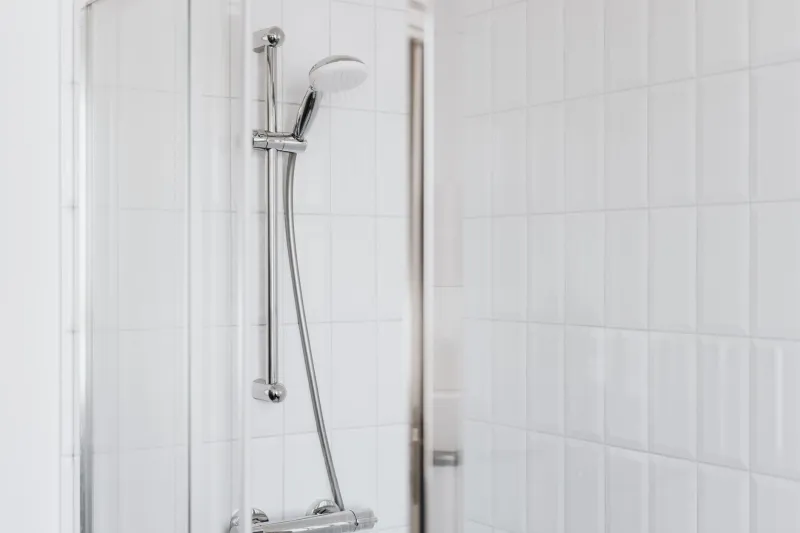
The shower, for most households, is the single most-used element in the bathroom. It is experienced every day, often multiple times. The investment in shower infrastructure—waterproofing, valve quality, pressure balancing, thermostatic control—will be felt in every single use for the life of the renovation. A soaking tub, by contrast, may be used a handful of times per month, or less.
This is not an argument against the soaking tub. It is an argument for conscious hierarchy. Allocate the deepest investment to the elements you will engage with most frequently, and allow aspirational pieces to occupy their rightful—but proportional—place in the overall composition.
A Framework for Spending with Intention
The following allocation model is not a rigid prescription, but a starting point for more deliberate planning:
- Infrastructure and systems (20–25%): Waterproofing, plumbing, electrical, ventilation, and structural work. Non-negotiable.
- Layout and design fees (8–12%): Professional design services that establish the spatial logic of the room before any materials are purchased.
- Primary functional fixtures (20–25%): The shower system, the vanity plumbing, and any integrated technology. Prioritize quality and longevity.
- Surfaces and finishes (25–30%): Tile, stone, cabinetry, and countertops. This is where aesthetic investment lives—but it should not dominate the budget at the expense of the categories above.
- Decorative fixtures and hardware (10–15%): Lighting, mirrors, towel bars, and accent pieces. Meaningful, but secondary.
The homeowner who approaches a renovation with this kind of structured intentionality will not necessarily spend less. But they will almost certainly spend better—and the bathroom they live with for the next two decades will reflect that discipline in ways that no mood board ever could.
The Measure of a Successful Renovation
The truest measure of a luxury bathroom is not what it looks like in a photograph taken on the day of completion. It is what it feels like on an ordinary Tuesday morning, three years after the renovation team has packed up and left.
Does the shower deliver exactly the temperature you set, instantly and consistently? Does the ventilation keep the room dry and odor-free without effort? Does the layout support your actual morning routine without friction or compromise? Do the surfaces still look as considered as they did on day one?
These are the questions that a well-allocated budget answers affirmatively. They are also the questions that the most beautiful, most expensive, most photographed bathrooms in the country sometimes cannot.
Spend on what you will live with. Protect what cannot be seen. Design for the life you actually lead. That is the antidote to the budget trap—and the foundation of a renovation that genuinely delivers on its promise.