Equity or Indulgence? What the Resale Market Actually Rewards in a Luxury Bathroom
The decision to renovate a luxury bathroom is rarely made on purely financial grounds. Homeowners who invest $100,000 or more in a primary bath are typically motivated by the quality of their daily experience—the pleasure of a well-designed space, the satisfaction of superior materials, the sense that their home reflects the standard of living they have worked to achieve.
This is entirely reasonable. A home is not merely a financial instrument, and personal enjoyment is a legitimate return on investment.
And yet, the moment a home enters the market, personal enjoyment ceases to be relevant. What matters then is whether a prospective buyer—with different tastes, different routines, and different aesthetic priorities—perceives sufficient value in the renovation to pay for it. That question, it turns out, produces some surprising answers.
What the Data Actually Shows
Recent analysis from the National Association of Realtors and independent appraisal research consistently places midrange bathroom renovations among the stronger performers in terms of cost recoupment. High-end renovations, counterintuitively, tend to recoup a smaller percentage of their costs—not because buyers disregard luxury bathrooms, but because the premium tier is where personal taste diverges most sharply from universal appeal.
The average cost recoupment for an upscale bathroom renovation in the US currently hovers in the 55–65 percent range, depending on market and project scope. In high-cost coastal markets—the Bay Area, New York, Miami, and similar metros—that figure can climb meaningfully higher, particularly for primary bathrooms in properties already positioned at the upper end of their neighborhood's price range.
But averages obscure the more instructive story: certain specific upgrades within luxury renovations recoup at rates well above the average, while others recoup at rates well below it. Understanding which is which is the essential skill for any renovator who wants to satisfy both personal taste and future equity.
The Universal Tier: What Buyers Consistently Value
Across markets and buyer profiles, certain luxury bathroom elements demonstrate near-universal appeal. These are upgrades that buyers recognize as genuinely functional improvements—not merely aesthetic preferences—and are therefore willing to pay for regardless of their own design sensibilities.
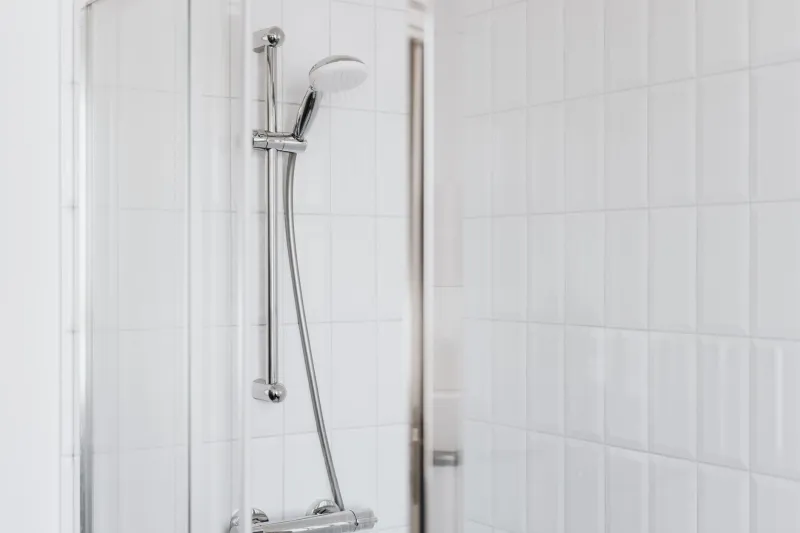
Thermostatic shower systems occupy a strong position in this category. A properly installed thermostatic valve with separate volume and temperature controls is a functional upgrade that any buyer can immediately understand and appreciate. It is not tied to a particular aesthetic. It works equally well in a contemporary bathroom and a traditionally styled one. Buyers who have experienced one will notice its absence in a competing property.
High-quality waterproofing and tile installation is another area that, while invisible, is increasingly recognized by sophisticated buyers and their inspectors. A bathroom that shows no evidence of moisture intrusion—no grout cracking, no efflorescence, no soft spots in the floor—signals quality construction in ways that influence buyer confidence broadly, not just in the bathroom itself.
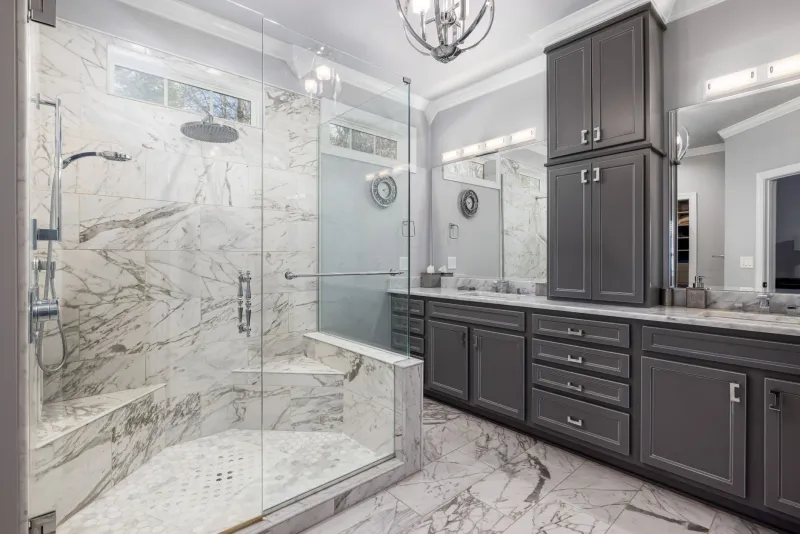
Double vanities in primary bathrooms consistently test well with buyers in the family-formation demographic, which represents a significant share of the luxury market. The functional benefit is clear and immediate. The aesthetic can be updated far more affordably than the plumbing infrastructure that supports it.
Generous, well-organized storage is systematically undervalued by renovators and overvalued by buyers. Buyers touring a home experience the bathroom as a space they will live in, not simply admire—and storage is one of the first practical questions they ask. A primary bath with intelligent, abundant concealed storage communicates livability in a way that a more dramatic but storage-poor room does not.
The Polarizing Tier: Beautiful, But Buyer-Dependent
A second category of luxury upgrades performs unevenly in the resale market—not because they lack quality or genuine appeal, but because they express a strong aesthetic point of view that not every buyer shares.
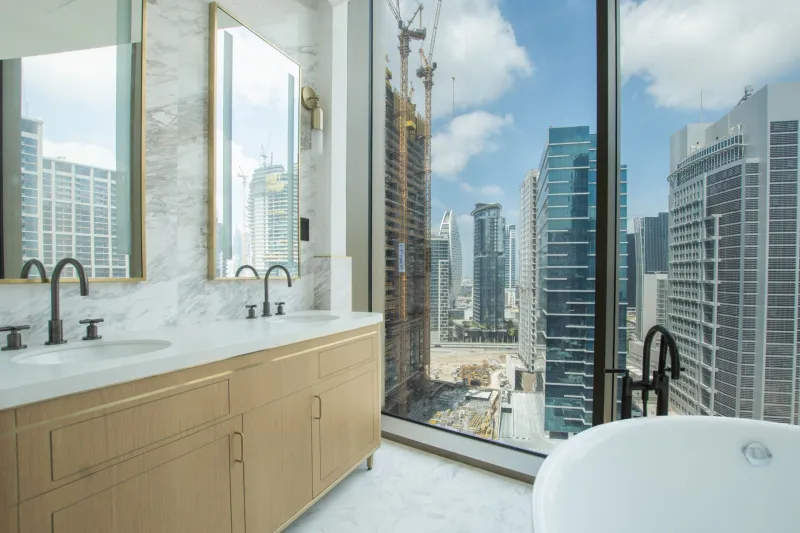
Freestanding soaking tubs are the most discussed example. They are among the most visually impactful elements in a luxury bathroom, and they photograph exceptionally well. But they are also among the most polarizing with buyers. Households with young children often view them as a safety concern. Buyers with mobility limitations may see them as impractical. Buyers who simply prefer showers over baths may regard the floor area they occupy as wasted.
This does not mean freestanding tubs should be avoided—particularly in markets where the buyer demographic skews toward empty nesters or single professionals who actively seek the spa-like experience they suggest. It means their contribution to resale value is conditional in a way that a double vanity's is not.
Highly specific stone selections carry similar risk. A homeowner who has fallen deeply in love with a particular quartzite—perhaps one with dramatic veining in an unusual colorway—has made an investment in personal pleasure that may not translate to buyer enthusiasm. Neutral, broadly appealing stone selections consistently outperform distinctive ones in resale performance, even when the distinctive selections are objectively more expensive and technically superior.
Integrated technology represents a growing area of uncertainty. Smart mirrors, digitally controlled shower systems, and automated lighting can add meaningful value in certain markets—particularly in tech-forward cities and among younger affluent buyers. In other markets, they introduce complexity that buyers perceive as a maintenance liability. The key variable is whether the technology has been integrated seamlessly enough that it reads as a feature rather than a complication.
The Diminishing Returns Tier
A third category of luxury upgrades represents spending that is almost entirely personal—investments that reflect the homeowner's taste and priorities but contribute minimally, if at all, to what a buyer will pay.
Custom steam systems, elaborate chromotherapy lighting, radiant heat in secondary bathrooms, and highly bespoke millwork detailing all fall into this tier. They are not poor investments from a quality-of-life perspective. For the homeowner who will use them daily for a decade before selling, they may well justify their cost on experiential grounds alone.
But renovators who are approaching a project with resale performance as a meaningful objective should understand clearly that these elements are unlikely to recover their cost in the transaction price. They are personal expenditures dressed in the language of renovation.
A Framework for Balanced Decision-Making
The most effective approach for a renovator navigating this landscape is not to optimize entirely for resale—that path leads to generic, risk-averse spaces that satisfy no one particularly well. Nor is it to ignore resale entirely—that path leads to idiosyncratic rooms that may actively complicate a future sale.
The productive middle ground begins with anchoring the renovation in the universal tier: invest generously in infrastructure, functional systems, and broadly appealing features that any buyer will recognize as genuine improvements. These form the equity foundation of the project.
From that foundation, allocate a deliberate portion of the budget to the elements that reflect personal taste and preference—the stone selection, the fixture finish, the statement piece that makes the room feel like yours. Do so with clear eyes about the fact that these investments are being made for the present occupant, not the future buyer.
The renovator who can hold both of these truths simultaneously—that a bathroom should be a personal sanctuary and a sound investment—will make better decisions than one who pretends there is no tension between them. There is always tension. The discipline lies in managing it with intention.