Designing for the Senses: A Seven-Layer Framework for the Ultimate Luxury Bathroom
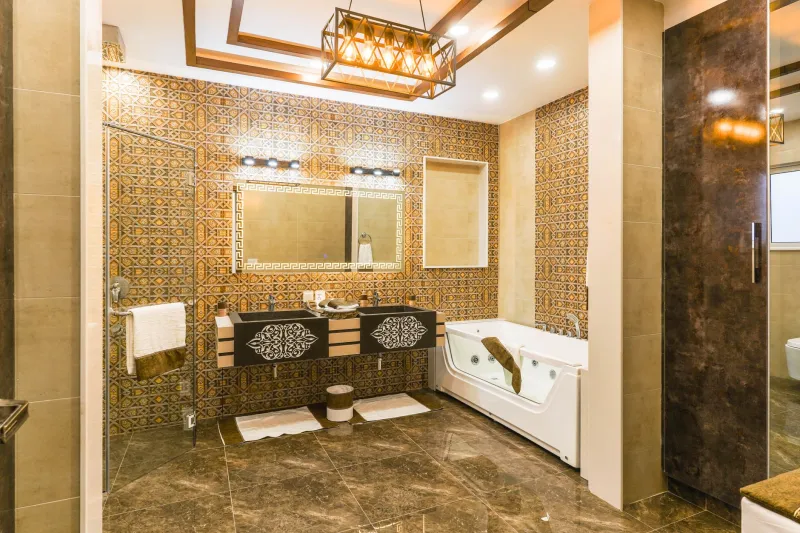
Walk into a truly exceptional bathroom and something immediate happens. Before you consciously register the marble vanity or the rainfall showerhead, your body relaxes. The air temperature is precise. The floor beneath your feet is warm. A faint, considered scent drifts through the ventilation. Sound feels absorbed rather than amplified. This is not accidental. It is architecture working at the level of human physiology.
At Seven Bathrooms, we have spent considerable time studying how the country's most accomplished interior designers approach high-end bathroom projects. The conclusion is consistent: the finest spaces are built in deliberate layers, each one addressing a different sensory register. Below, we outline those seven layers—and explain why each one matters.
Layer One: The Foundation Beneath Your Feet
Every sensory experience begins at ground level. Radiant floor heating, installed beneath stone, porcelain, or engineered hardwood, is perhaps the single most transformative upgrade available to American homeowners today. The technology has matured considerably; modern hydronic and electric systems offer precise zone control, programmable schedules, and even integration with smart-home platforms like Google Home and Apple HomeKit.
Beyond temperature, the tactile character of the floor surface itself warrants careful selection. Honed stone, for instance, communicates a fundamentally different message than polished—warmer underfoot, less reflective, more grounded. Designers often specify slip-resistant textures near wet areas not just for safety, but because the subtle grip beneath bare feet reads as intentional craftsmanship.
Layer Two: Acoustic Architecture
The luxury bathroom is, by its very nature, a refuge from the noise of daily life. Yet most renovation budgets allocate nothing to acoustic performance. This is a significant oversight.
Sound management in a bathroom operates on two fronts: reducing intrusive noise from adjacent rooms and controlling reverberation within the space itself. The former is addressed through resilient channel framing, acoustic insulation batts, and solid-core doors with proper sealing. The latter—often the more noticeable of the two—responds to material selection. Hard surfaces like glass, porcelain tile, and stone amplify sound. Introducing soft counterpoints—a thick looped bath rug, wood ceiling panels, even a fabric-wrapped vanity stool—absorbs reflected sound and transforms the acoustic character of the room from clinical to contemplative.
High-end integrated audio systems deserve mention here as well. Flush-mounted ceiling speakers, waterproofed and tuned to the room's dimensions, allow music or ambient soundscapes to fill the space at a consistent, enveloping volume rather than blaring from a countertop device.
Layer Three: Light as a Living Element
Lighting design in premium bathrooms has evolved far beyond the simple calculus of task lighting above the mirror. Contemporary luxury projects treat light as a dynamic material—one that shifts in color temperature, intensity, and direction throughout the day to support human circadian rhythms.
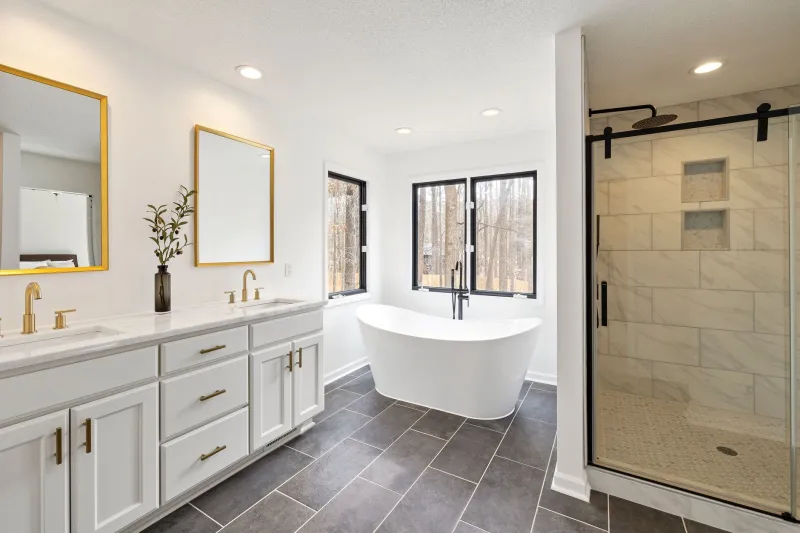
Morning light ideally skews cool and bright, signaling the body to elevate cortisol and prepare for activity. Evening light should warm and dim, cueing melatonin production and relaxation. Tunable LED systems, controlled via dedicated apps or wall-mounted panels, make this biological attunement achievable in any American home. Layering these tunable sources—recessed ceiling fixtures, illuminated niches, backlit mirrors, and low-level toe-kick lighting—creates a three-dimensional luminous environment that no single overhead fixture could approximate.
Natural light, where available, remains irreplaceable. Frosted clerestory windows, skylights with adjustable shading, and privacy glazing technologies allow designers to maximize daylight without sacrificing the intimacy the bathroom requires.
Layer Four: Temperature and Humidity Control
The body's comfort in a bathroom extends well beyond floor warmth. Ambient air temperature, relative humidity, and ventilation quality all contribute to how a space feels. Heated towel rails—once considered an indulgence—are now recognized as both functional and atmospheric, ensuring that the tactile experience of a warm towel after bathing reinforces the broader sense of care embedded in the room's design.
High-performance exhaust fans, operating at whisper-quiet decibel levels, maintain air quality without the disruptive mechanical noise that undermines the spa-like atmosphere. Some luxury projects incorporate humidity-sensing fans that activate automatically, maintaining ideal moisture levels without any manual intervention.
Layer Five: Material Honesty and Tactile Richness
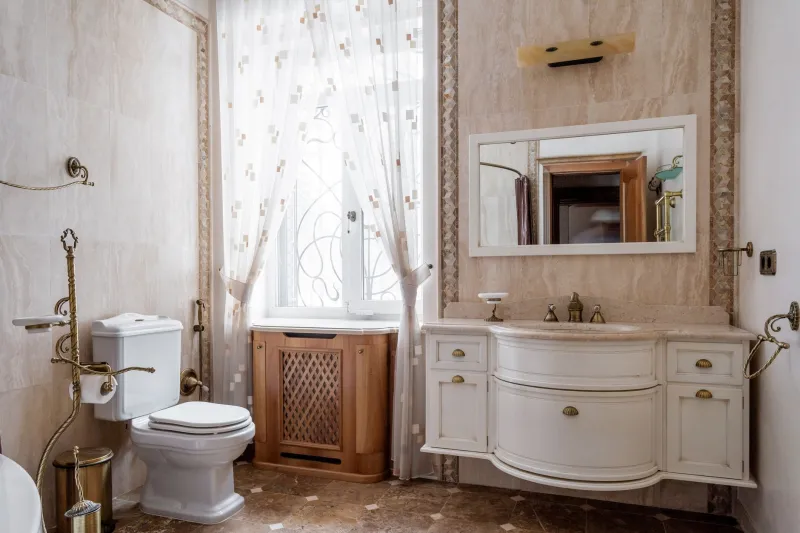
Premium materials communicate their quality through touch as much as through appearance. The weight of a solid brass faucet handle, the cool smoothness of a thick porcelain sink basin, the subtle grain of a wood-veneer cabinet door—these sensations register in the hands and fingertips and collectively build an impression of substance and care.
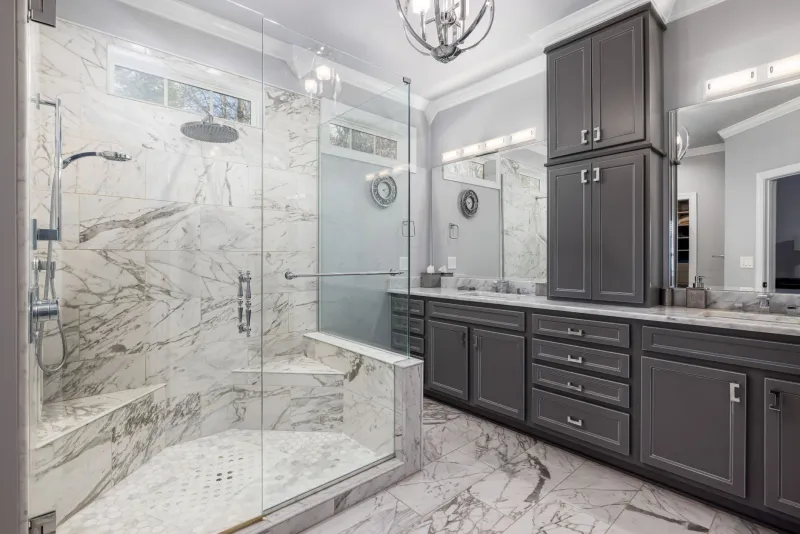
Designers working at the highest level resist the temptation to fill a budget with visual spectacle at the expense of tactile integrity. A bathroom with a single slab of bookmatched marble and simple, weighty fixtures will consistently feel more luxurious than one layered with inexpensive materials dressed up with ornamental detail. The hand knows the difference, even when the eye is briefly deceived.
Layer Six: Scent and Air Quality
Olfaction is the sense most directly connected to emotional memory, and yet it is almost universally ignored in bathroom design discussions. Sophisticated projects address scent through several channels: integrated aromatherapy diffusers built into steam shower systems, natural ventilation pathways that reduce chemical off-gassing from synthetic materials, and the deliberate selection of wood species—like teak or cedar—that contribute their own subtle fragrance to the environment.
Material choices matter here beyond the aesthetic. Low-VOC paints, natural stone, solid wood, and plant-based sealers contribute to an air quality profile that feels clean and fresh rather than synthetic. This is a layer that operates largely below conscious awareness, but its cumulative effect on the room's emotional register is substantial.
Layer Seven: Visual Coherence and Spatial Proportion
The final layer—and the one most homeowners address first—is visual design. At this level of analysis, the emphasis shifts from individual fixture selection to spatial coherence: the relationship between ceiling height and floor area, the visual weight of the vanity against the opposing wall, the way natural and artificial light interact with surface finishes at different hours of the day.
Professional designers often speak of a bathroom needing a single organizing idea—a material, a geometry, a tonal palette—from which all other decisions radiate. This organizing principle is what prevents a space from feeling like an accumulation of expensive objects and transforms it into something unified and resolved.
The Compounding Effect
What distinguishes a truly extraordinary bathroom from a merely expensive one is the compounding relationship between these seven layers. Each element, considered individually, contributes something. Considered together, they create an experience that exceeds the sum of its parts—a space that feels, to the person standing in it, like genuine sanctuary.
For homeowners embarking on a luxury renovation, this framework offers a practical starting point: not a checklist, but a lens through which to evaluate every decision, from the subfloor up.