What Luxury Bathroom Upgrades Actually Sell Homes—And Which Ones Quietly Hurt Your Resale
There is a persistent myth in American real estate circles: that luxury is always an asset. The logic feels intuitive. Spend more, get more. Upgrade the bathroom, raise the value. Install the statement soaking tub, attract premium buyers.
The reality is considerably more nuanced—and, frankly, more interesting. Real estate data from markets across the country consistently reveals a gap between what affluent homeowners love in their own bathrooms and what prospective buyers are actually willing to pay extra to acquire. Understanding that gap is essential for anyone who intends to renovate thoughtfully, enjoy their space fully, and eventually sell without regret.
This is not an argument against luxury. It is an argument for precision.
The Upgrades That Reliably Move the Needle
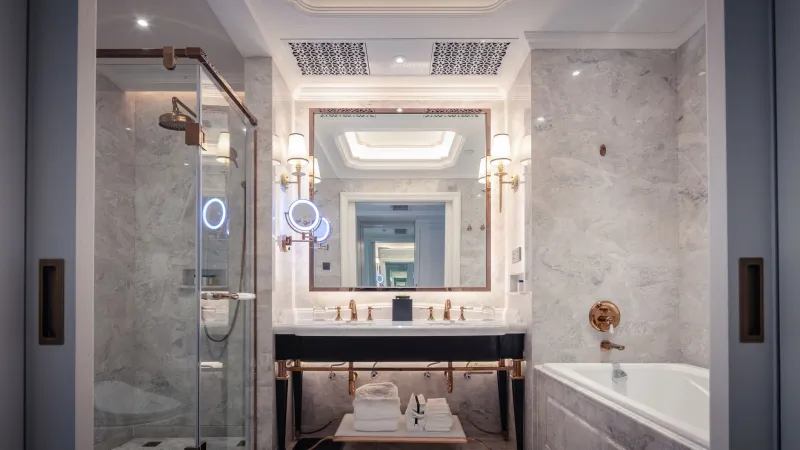
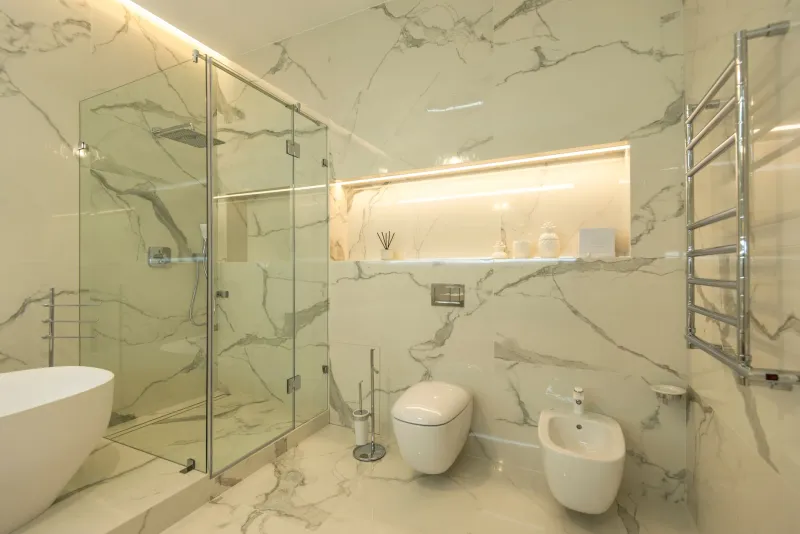
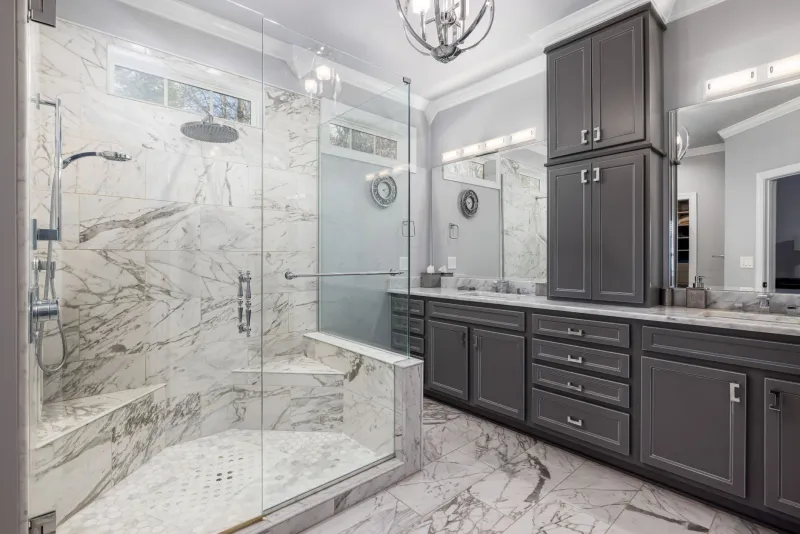
Walk-in showers with frameless glass enclosures remain among the most consistently valued features in luxury bathroom resale analysis. Buyers across virtually every major U.S. market—from the Sun Belt suburbs to the urban Northeast—respond positively to a well-proportioned, tile-surround shower with quality fixtures and clean sight lines. The frameless glass component is particularly significant: it reads as current, maintenance-conscious, and spatially generous. It also photographs exceptionally well, which matters enormously in a market where the majority of buyer decisions begin online.
Double vanities in the primary bathroom carry comparable appeal. For couples, the functional case is obvious. But the resale value of a double vanity extends beyond utility—it signals a bathroom designed for two adults, which is the implicit expectation in any primary suite at the luxury price point. Buyers who encounter a single-sink vanity in an otherwise premium bathroom frequently flag it as an oversight, even when the overall finish quality is high.
Heated flooring has crossed from niche amenity to broadly recognized selling point in most northern and mid-Atlantic markets. In warmer climates like Florida, Texas, and Southern California, its appeal is more modest but rarely a liability. The key distinction: electric radiant systems that are already installed and operational read as a feature. Those still listed as a future possibility or rough-in read as an unfinished project.
Quality fixture brands matter more than many homeowners expect. Kohler, Brizo, Hansgrohe, and Rohl carry name recognition among the buyer segment shopping at the luxury price point. Unbranded or obscure fixtures—regardless of their actual quality—tend to register as cost-cutting decisions, which undermines the overall impression the bathroom is meant to create.
The Middle Ground: Features That Divide Buyers
Freestanding soaking tubs occupy genuinely contested territory. They are among the most visually dramatic elements available in residential bathroom design, and in the right setting—a generous primary suite with ample floor space and strong natural light—they can be transformative. However, data from the National Association of Realtors and various regional MLS analyses suggests that buyers are increasingly pragmatic about freestanding tubs: they want to see one, but many do not intend to use it regularly. In primary bathrooms where the tub comes at the expense of shower size or storage, it can become a point of negotiation rather than enthusiasm.
The guidance here is spatial: if the bathroom can accommodate a freestanding tub without compromising the shower or the overall flow of the room, it is likely an asset. If it requires trade-offs, a large-format walk-in shower will almost always serve resale better.
Steam showers present a similar dynamic. The wellness-oriented buyer—and this segment is growing—regards an integrated steam system as a genuine differentiator. But steam systems require maintenance, professional calibration, and periodic component replacement. Buyers who are not already familiar with steam shower ownership sometimes view them with apprehension rather than enthusiasm. Clear documentation of maintenance history and a well-functioning system at the time of showing are essential.
The Features That Quietly Alienate Buyers
This is where candor is most valuable.
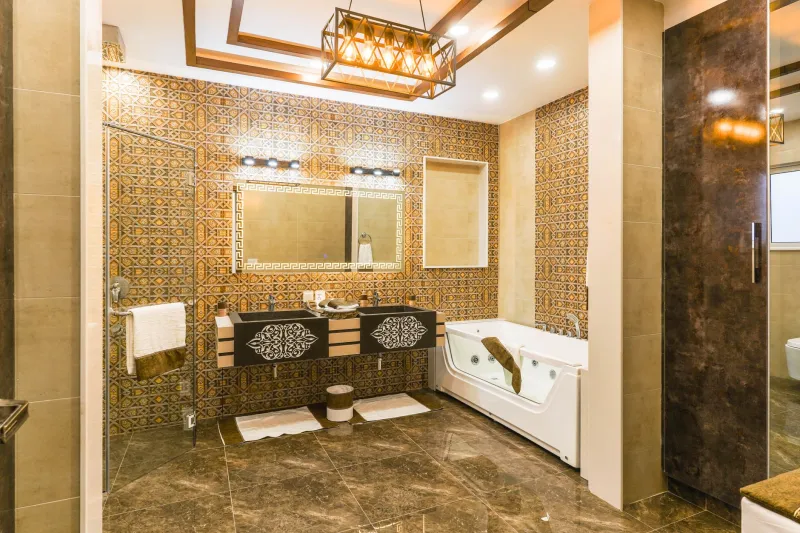
Highly personalized tile work is the single most common source of resale friction in luxury bathrooms. A custom mosaic floor depicting a geometric pattern in three imported stone varieties may represent a significant artistic and financial investment. It may be genuinely beautiful. And it may eliminate a meaningful portion of your potential buyer pool, because taste is personal and renovation is expensive. Bold, irreversible surface choices—regardless of their quality—require the right buyer to see their value. Neutral, high-quality tile in a format that reads as timeless (large-format porcelain, classic marble subway, honed limestone) will consistently outperform statement tile in resale scenarios.
Overly complex smart-home integrations carry a related risk. A bathroom equipped with a proprietary digital control system for shower temperature, lighting scenes, mirror defrost, music, and heated floor scheduling sounds impressive on paper. In practice, buyers who are not already embedded in that ecosystem may view it as a liability—a system they will need to learn, maintain, and potentially replace. Smart features that operate through broadly adopted platforms (Apple, Google, Amazon) fare significantly better.
Reduced storage in favor of aesthetics is a persistent renovation mistake. Open shelving, floating vanities without adequate drawer depth, and the elimination of linen closets in the name of visual simplicity all generate negative buyer feedback. Luxury buyers expect both beauty and function. A bathroom that sacrifices the latter for the former signals that the renovation prioritized photography over livability.
The Principle Beneath the Data
The pattern that emerges from a genuine analysis of luxury bathroom resale performance is not complicated, even if it is occasionally counterintuitive. Features that are broadly desirable, functionally sound, and visually neutral within the luxury register consistently outperform those that are idiosyncratic, high-maintenance, or spatially compromising.
This does not mean renovating for the median buyer. It means understanding the distinction between personal luxury—the choices that make your home feel extraordinary to you—and transferable luxury, the investments that a future buyer will recognize and value without needing to share your specific taste.
The most financially sophisticated homeowners we speak with have learned to pursue both simultaneously. They select materials and fixtures of genuine quality, in formats that have demonstrated staying power. They resist the temptation to make the bathroom a canvas for maximalist self-expression. And they invest in the functional elements—heating, lighting, storage, water pressure—that every buyer, regardless of aesthetic preference, will notice and appreciate.
That is not a compromise. That is the long game, played well.