Anchoring the Bathroom: A Considered Guide to Choosing the Right Vanity for a Luxury Space
The vanity occupies a singular position in bathroom design. It is the most frequently used surface in the room, the primary storage solution, and—more often than not—the first thing a visitor notices upon entering. Unlike a freestanding tub, which can be admired from a distance, or a rainfall showerhead, which is experienced privately, the vanity performs both as architecture and as daily-use furniture. It must be beautiful and functional, expressive and practical, individual and broadly appealing.
For homeowners undertaking a luxury bathroom renovation, the vanity decision is rarely straightforward. The market offers an extraordinary range of options, from fully bespoke millwork crafted by local cabinetmakers to internationally recognized designer pieces that arrive as finished objects, to the clean, hardware-minimal floating consoles that have become synonymous with contemporary design. Each path has genuine merit—and each carries implications that extend well beyond aesthetics.
Understanding What Your Vanity Communicates
Before evaluating specific options, it is worth acknowledging that vanity selection is, in part, an act of communication. The choices made in a luxury bathroom—particularly around its dominant furniture piece—signal something about the homeowner's priorities, tastes, and relationship to the space.
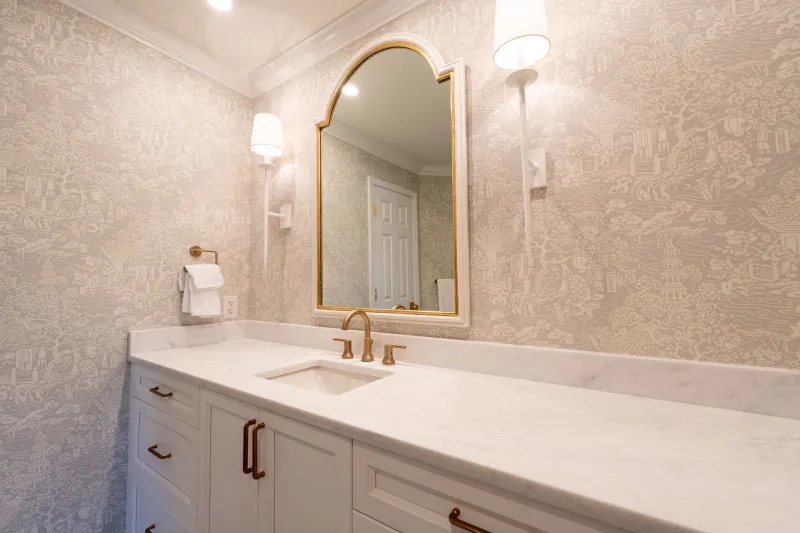
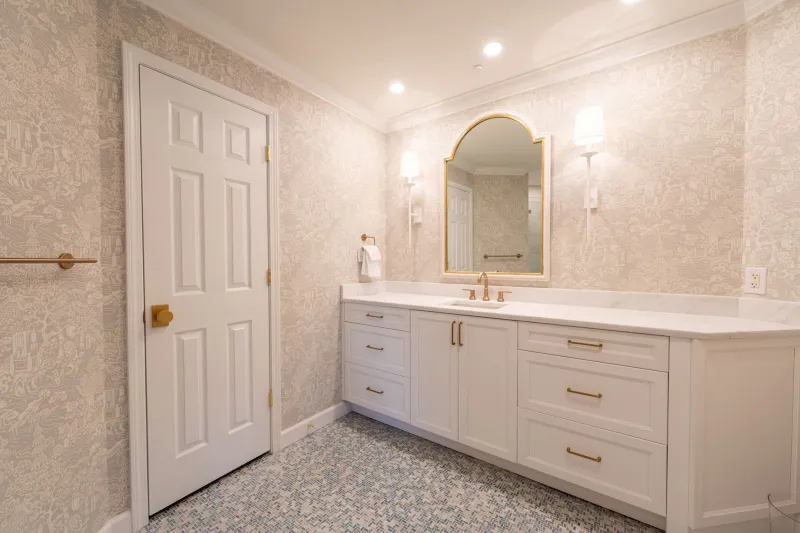
A fully custom built-in vanity, designed and constructed specifically for the room, communicates permanence and investment. It says that the bathroom was conceived as a whole, that details were not left to chance, and that the owner prioritized fit—both physical and aesthetic—above convenience. This is the language of the serious renovator.
A designer ready-made vanity—a piece from a respected manufacturer such as Duravit, Robern, or Lacava—communicates a different kind of sophistication: fluency with the design world, confidence in selecting from an established vocabulary, and an appreciation for the engineering and material quality that reputable manufacturers invest in their products. It is the choice of the informed buyer.
A floating minimalist design, whether custom or from a specialty retailer, communicates a preference for restraint. It says that the room should feel uncluttered, that visual weight should be minimized, and that the architecture of the space—the tile, the light, the negative space—should carry as much presence as the fixtures themselves.
None of these positions is superior. But understanding what each communicates helps clarify which aligns with your renovation goals.
The Case for Custom Cabinetry
Custom cabinetry offers something that no off-the-shelf product can: exact dimensional fit. In bathrooms with unusual proportions—long, narrow rooms; spaces with sloped ceilings or structural columns; bathrooms that need to accommodate plumbing in awkward locations—custom millwork is frequently the only way to achieve a result that feels intentional rather than compromised.
Beyond fit, custom cabinetry allows for material and finish decisions that are genuinely personal. Wood species, door profiles, hardware, interior organization systems, and surface treatments can all be specified to a degree of precision that transforms the vanity from furniture into architecture. For homeowners who have invested significantly in other elements of the bathroom—book-matched stone, hand-made tile, bespoke fixtures—a custom vanity ensures that the millwork rises to the same standard.
The practical considerations are real, however. Custom cabinetry requires lead time—typically eight to fourteen weeks from approval to delivery for most residential millwork shops, and longer for highly complex projects. It also requires a skilled designer or architect to develop the specifications, and a reliable contractor to execute the installation. The investment is substantially higher than comparable ready-made options, and the process demands active client engagement throughout.
For homeowners planning a primary bathroom renovation with a timeline of six months or more, and a budget that accommodates the premium, custom is often the most satisfying path. For those working under tighter constraints, it may introduce more risk than reward.
Designer Ready-Made: The Underappreciated Middle Ground
The category of designer ready-made vanities is broader and more sophisticated than many homeowners realize. The major European bathroom manufacturers—Duravit, Villeroy & Boch, Agape, Antonio Lupi—have invested decades in developing vanity collections that balance thoughtful design with precise manufacturing tolerances. American brands such as Robern and Strasser Woodenworks offer comparable quality with shorter lead times and domestic supply chains.
The advantages of this category are considerable. Lead times are typically four to eight weeks, which is meaningfully faster than custom millwork. The engineering quality—drawer glide mechanisms, soft-close hinges, moisture-resistant finishes on interior surfaces—often exceeds what a local cabinetmaker can economically provide at comparable price points. And the design pedigree of the leading manufacturers means that the resulting piece will hold up aesthetically over time.
Ready-made vanities also offer a degree of certainty that custom projects cannot always match. When you select a specific model, you know exactly what you are receiving. Finishes are consistent. Dimensions are precise. The risk of the unexpected—always present in custom work—is substantially reduced.
The limitation is flexibility. Ready-made vanities are designed to work across a range of bathrooms, which means that none of them is designed specifically for yours. In a room with standard proportions and conventional plumbing placement, this is rarely a meaningful constraint. In a room with unusual requirements, it can be.
Floating Designs: Discipline as a Design Philosophy
The floating vanity—wall-mounted, with visible floor space beneath—has become one of the most enduring expressions of contemporary bathroom design. Its appeal is partly visual: a vanity that does not meet the floor creates an impression of lightness and openness that is particularly valuable in smaller bathrooms. It also makes cleaning the floor considerably easier, which is a practical benefit that should not be underestimated.
But the floating vanity is also a philosophical statement. It represents a deliberate choice to minimize rather than elaborate, to let the room breathe rather than fill it. In bathrooms where the tile work, the stone, or the architectural detailing is meant to be the primary visual experience, a restrained floating console supports rather than competes with those elements.
The structural requirements are worth noting. A wall-mounted vanity places concentrated load on the wall framing, and installation requires either blocking in the wall cavity or a mounting system rated for the specific weight of the piece and its contents. This is standard work for an experienced contractor, but it is not something that should be improvised.
Aligning the Decision with Renovation Goals
For homeowners whose primary motivation is personal enjoyment of the space, the choice should follow taste and practicality above all else. For those with resale considerations in mind, the calculus is slightly different. Custom cabinetry that is executed with exceptional quality and integrated thoughtfully into the room tends to photograph well and read as a premium feature to prospective buyers. Designer ready-made pieces from recognized manufacturers carry brand recognition that can be referenced in listings. Floating minimalist designs appeal strongly to contemporary buyers but may feel cold to those who prefer a more traditional aesthetic.
In every case, the vanity decision should be made in relation to the whole room—not in isolation. The right vanity for a marble-clad, classically proportioned primary bathroom is not the same as the right vanity for a light-filled, white-oak-and-concrete renovation. The best choice is always the one that makes the entire room more coherent.
At Seven Bathrooms, we work with homeowners at every stage of the vanity selection process—from early concept development through to final specification. The range of options is wide, but the framework for choosing well is consistent: understand what you need the piece to do, understand what you want it to say, and select accordingly.