Breathing in Luxury: Why Olfactory Design Is the Final Frontier of the High-End Bathroom
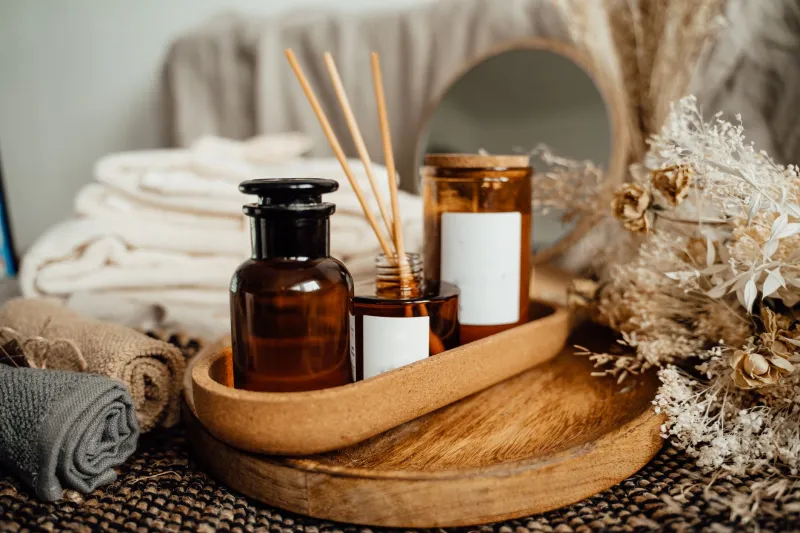
There is a moment, familiar to anyone who has stepped into a truly exceptional hotel bathroom, when the space communicates something beyond the visual. The marble is immaculate, the lighting perfectly calibrated—and then there is something else entirely. A fragrance, subtle and deliberate, that settles into the room like a second atmosphere. It does not announce itself. It simply belongs.
This is olfactory design, and for all the sophistication the American luxury bathroom market has achieved in recent years—smart mirrors, acoustic paneling, radiant flooring, biophilic installation—scent remains the dimension most consistently left to chance. That is beginning to change, and the shift is more consequential than many homeowners and even some designers appreciate.
The Science Behind Why Scent Matters More Than You Think
The olfactory system is neurologically distinct from every other sense. While sight and sound are processed through the thalamus before reaching the brain's emotional centers, scent travels directly to the limbic system—the region governing memory, mood, and emotional response. This means fragrance bypasses the rational filter almost entirely. A scent does not merely suggest a feeling; it induces one.
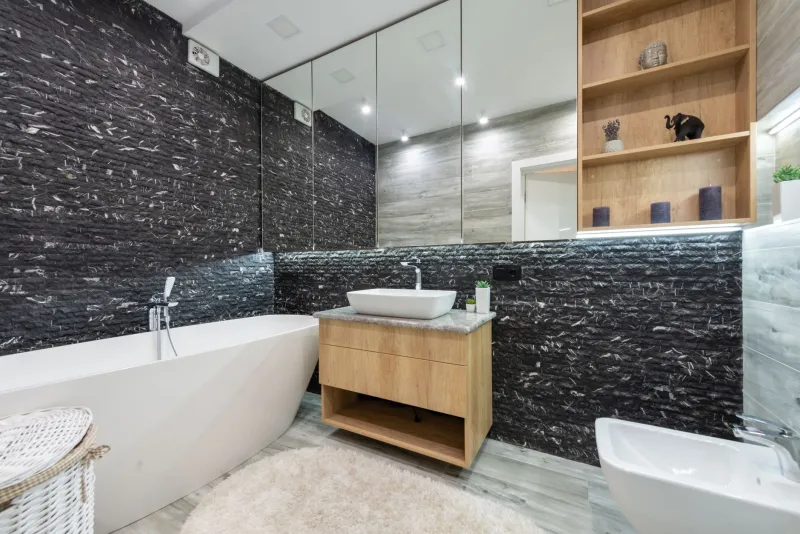
For bathroom design, this has profound implications. A space that smells of cedar and cool stone will register as calm and grounded even before the eye has finished registering the travertine wall cladding. Conversely, a bathroom that carries even faint traces of humidity, chemical cleaning agents, or competing fragrance products will undermine the experience of an otherwise flawless interior—sometimes without the occupant consciously identifying the source of their discomfort.
Research in environmental psychology consistently demonstrates that scent is among the most powerful modulators of perceived spatial quality. In luxury hospitality, this is already well understood. Signature scents are deployed at the property level by major hotel groups as a brand asset, calibrated by specialists and diffused through HVAC systems with the same precision applied to ambient lighting. The residential market is only now catching up.
The Most Common Olfactory Mistakes in High-End Bathrooms
Before discussing what distinguished design looks like, it is worth examining what most bathrooms—including many expensive ones—get wrong.
Fragrance competition is the most pervasive problem. When a bathroom contains multiple scented products—candles, reed diffusers, soap dispensers, shampoo bottles, cleaning sprays—each contributing its own aromatic signature, the result is not richness but olfactory noise. The brain receives conflicting inputs and the cumulative effect reads as neither pleasant nor neutral, but as vaguely unsettling. Luxury is not the accumulation of scented products; it is the curation of a single, coherent aromatic identity.
Ventilation neglect is the second major error. A powerful exhaust fan that activates during use and then shuts off immediately creates a vacuum that draws in ambient household odors—cooking smells, pet dander, HVAC dust—at precisely the moment the bathroom is meant to feel restorative. Sophisticated ventilation design accounts for this by incorporating delayed shutoff timers, ERV (energy recovery ventilation) integration, and, in high-specification projects, dedicated makeup air systems that introduce filtered, lightly conditioned air rather than simply exhausting stale air.
Placement without purpose rounds out the common failures. A diffuser positioned near a window loses its effect to the competing current of outdoor air. One placed too close to the shower generates humidity interference that distorts fragrance molecules and accelerates the degradation of essential oils. These are not minor details—they are the difference between a scent experience that reads as intentional and one that reads as accidental.
How Professional Designers Are Approaching Scent as Architecture
The designers working at the leading edge of American luxury residential bathroom design have begun treating olfactory programming as a design phase, not a decorating afterthought. This means making scent decisions at the planning stage, before walls are closed and HVAC systems are finalized.
In practical terms, this involves several interconnected considerations.
Diffusion infrastructure is increasingly being built into the space itself. Whole-room cold-air diffusion systems—which disperse essential oil without heat, preserving the integrity of fragrance compounds—can be integrated into ductwork or installed as discreet, architecturally flush units that disappear into millwork. These systems allow fragrance intensity to be adjusted seasonally or even by time of day, creating an olfactory rhythm that mirrors the bathroom's use patterns: lighter and more energizing in the morning, warmer and more enveloping in the evening.
Fragrance zoning is another technique borrowed from commercial hospitality. In larger bathrooms—those with separate wet rooms, soaking tub alcoves, or dedicated dressing areas—different aromatic profiles can be assigned to different zones. A eucalyptus and mint presence near the shower supports the functional, invigorating quality of that space, while a warmer, more resinous fragrance in the soaking tub area encourages the slower, more contemplative experience that fixture invites.
Material scent is perhaps the most underappreciated variable. Certain natural materials carry inherent aromatic properties that interact with the designed fragrance environment. Untreated or lightly sealed cedar, teak, or certain limestone varieties contribute a low-level, ambient scent signature that grounds the space in something organic and enduring. When chosen with this in mind, material selection and fragrance curation become complementary disciplines rather than independent ones.
Building an Olfactory Identity for Your Bathroom
For homeowners undertaking a luxury bathroom renovation, the entry point into olfactory design does not require an HVAC overhaul. It begins with a more disciplined approach to what enters the room.
Start by auditing every scented product currently present in the space. Consolidate where possible, and establish a single fragrance family—woody and mineral, floral and green, citrus and aquatic—that will serve as the room's aromatic signature. All products, from hand soap to candle to diffuser oil, should operate within that family. Disparate notes are not layering; they are interference.
Next, consider placement. A high-quality cold-air diffuser positioned at the interior wall, away from windows and direct shower spray, at approximately mid-height, will distribute fragrance most effectively throughout the room. Avoid positioning near exhaust fans, which will simply pull the scent out of the space before it can settle.
Finally, calibrate intensity. Luxury fragrance environments are almost always more subtle than homeowners expect. The goal is not for a guest to immediately identify the scent upon entering. The goal is for them to feel, without knowing precisely why, that the room is extraordinary.
The Sensory Bathroom, Complete
The finest bathrooms being designed in the United States today are spaces that operate on every human sense simultaneously—where light, sound, temperature, texture, and scent are coordinated into a single, coherent experience. For too long, the olfactory dimension has been the missing element in that equation, left to chance or delegated to a candle selected without strategic intent.
To treat scent as seriously as tile selection, fixture specification, or lighting design is not an indulgence. It is the completion of a sensory architecture that, until it is fully realized, remains—however beautiful—unfinished.