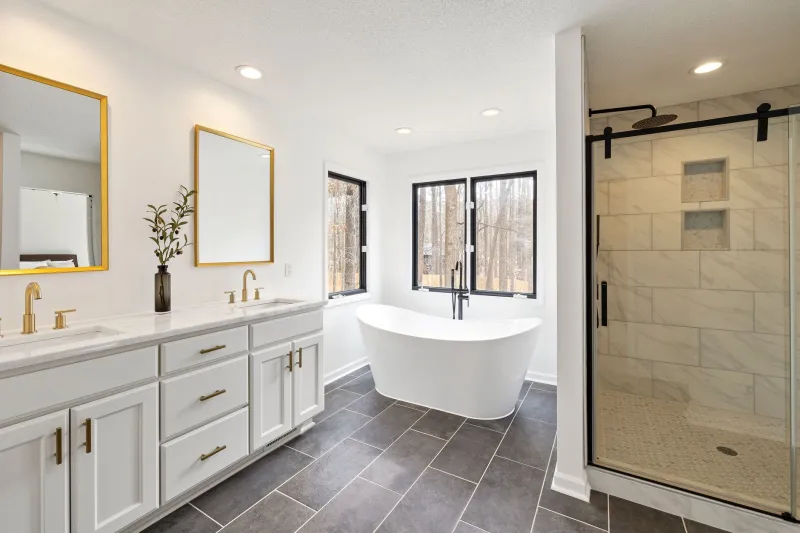
The Wellness Bathroom: How Affluent Americans Are Bringing Five-Star Resort Experiences Home in 2024
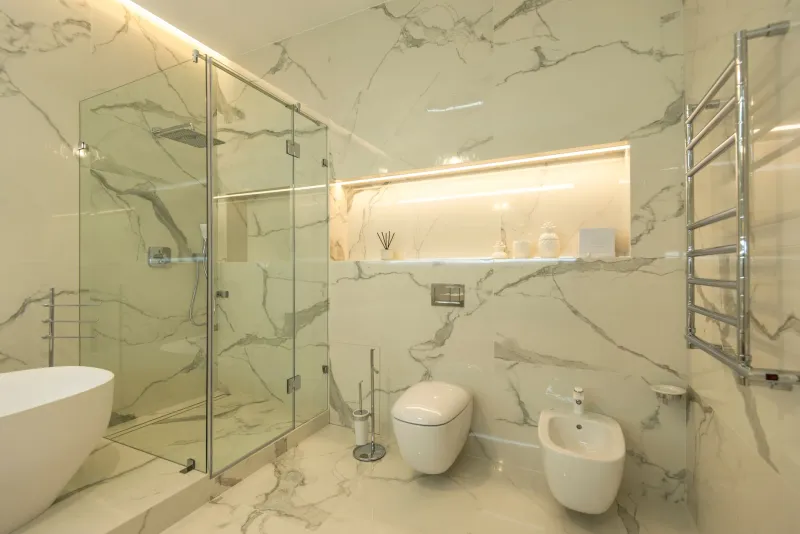
From Functional Room to Personal Sanctuary
For most of the twentieth century, the American bathroom was designed around efficiency. It was a place to prepare for the day, not a destination in itself. That understanding has changed fundamentally.
Industry research from the National Kitchen and Bath Association indicates that bathroom renovation spending among households earning over $250,000 annually reached record levels in 2023, with average project budgets for primary bathroom remodels in this demographic exceeding $75,000. The fixtures driving that investment tell a clear story: rainfall shower systems, freestanding soaking tubs, steam generators, heated surfaces, and integrated smart technology are no longer considered extravagances — they are the baseline expectations of a new category of residential space that designers are increasingly calling the wellness bathroom.
"The bathroom used to be the last room a client wanted to talk about," notes one New York-based interior designer who works exclusively with residential clients in the seven-figure renovation tier. "Now it is frequently the first. People want to feel, at least for twenty minutes in the morning and thirty minutes in the evening, that they are somewhere extraordinary."
The Post-Pandemic Catalyst
The psychological origins of this trend are not difficult to trace. The extended period of restricted travel that defined 2020 and much of 2021 prompted a significant reallocation of discretionary spending. High-net-worth Americans who had previously spent liberally on international travel, hotel stays, and spa memberships redirected those resources toward their primary residences — and the bathroom, long neglected as a renovation priority relative to kitchens and living spaces, became the unexpected beneficiary.
What began as pandemic-era compensation has matured into a durable lifestyle preference. Families who invested in their bathrooms during that period report that the daily ritual of a well-designed wellness space has become, for many of them, non-negotiable. The renovation market has responded accordingly.
Rainfall Showers and the Redefinition of the Daily Ritual
Of all the fixtures associated with the resort-to-residence movement, the rainfall shower system has achieved the broadest adoption. These ceiling-mounted showerheads — ranging in diameter from 10 inches to expansive 24-inch panels — replicate the sensation of standing beneath a warm, gentle rain, an experience that is physiologically distinct from the directional pressure of a conventional showerhead.
At the premium end of the market, rainfall systems are integrated into thermostatic digital valve platforms that allow users to pre-program their preferred water temperature, flow rate, and combination of active outlets — ceiling rain, handheld wand, and side body jets — from a touchscreen panel or a paired smartphone application. Brands such as Kohler, Grohe, and Dornbracht have developed ecosystems of connected shower components that allow a level of personalization previously available only in the treatment rooms of destination spas.
The installation investment for a fully specified digital shower system, including valve, trim, multiple outlets, and digital interface, typically ranges from $5,000 to $25,000 depending on configuration — a figure that resonates with the segment of the market for which a four-night resort stay at equivalent luxury is a routine expense.
Soaking Tubs: The Return of the Long Bath
The freestanding soaking tub represents the most visually dramatic element of the wellness bathroom movement, and its resurgence has been striking. After years in which the garden tub — that large, platform-mounted fixture installed as a standard feature in 1990s and early 2000s American homes — fell out of favor due to low usage rates, the deep soaking tub has returned in a fundamentally different form.
Contemporary soaking tubs, influenced by the Japanese ofuro tradition, prioritize depth over footprint. Where the garden tub offered a shallow, reclined soak, the modern wellness tub — typically 22 to 28 inches deep — allows full-body immersion in water temperatures that promote genuine muscular relaxation and stress reduction. Chromotherapy lighting, integrated into the tub's interior, allows users to select from a spectrum of colors associated with different physiological and psychological effects, a feature borrowed directly from high-end spa programming.
Materials have also evolved. Cast iron remains the benchmark for heat retention, but composite materials such as volcanic limestone resin and solid surface acrylic now offer comparable thermal performance with greater flexibility in form.
Steam Systems: The Home Hammam
Perhaps the most distinctly spa-derived feature now appearing in American primary bathrooms is the residential steam system. Once confined to commercial wellness facilities, steam generators sized for residential shower enclosures have become increasingly accessible in terms of both technology and installation logistics.
A properly configured steam shower requires a fully waterproofed, sealed enclosure — typically constructed from large-format porcelain, natural stone, or glass tile — connected to a steam generator unit that can be located up to 25 feet away in a vanity cabinet or closet space. The generator heats water to produce steam that fills the enclosure within two to four minutes, creating an environment of 110 to 115 degrees Fahrenheit with near-total humidity.
The physiological benefits associated with regular steam bathing — improved circulation, respiratory relief, and accelerated muscle recovery — have made the steam shower a particularly compelling investment for health-conscious homeowners. Residential steam systems from established manufacturers such as MrSteam and Kohler typically represent an installed investment of $3,500 to $12,000, depending on generator capacity and enclosure complexity.
Smart Technology and the Intelligent Bathroom
The wellness bathroom is, by definition, a technologically sophisticated space. Heated mirrors with anti-fog properties and integrated LED task lighting have become standard in luxury installations, eliminating the frustration of post-shower mirror condensation while providing superior vanity lighting. Voice-activated controls, compatible with platforms such as Amazon Alexa and Google Home, allow users to adjust lighting scenes, activate shower presets, and control music systems without touching a surface.
Smart toilets — a category that commands significant market share in Japan and is now gaining meaningful traction among American luxury buyers — integrate heated seats, bidet functionality, automatic lid operation, and deodorizing systems into a single fixture. Toto's Washlet series and Kohler's Numi collection represent the domestic market leaders in this category, with retail prices ranging from $900 to over $8,000.
What Separates a Luxurious Bathroom from a Merely Expensive One
Designers who work in this segment consistently emphasize that the defining characteristic of a truly luxurious bathroom is not the cumulative cost of its components but the coherence of its design and the quality of its sensory experience.
Materials should be selected for how they feel underfoot and underhand, not merely how they photograph. Lighting should be tunable across a full spectrum from energizing cool white for morning routines to warm amber for evening decompression. Ventilation systems — often overlooked — should be powerful enough to clear steam and humidity silently, without the mechanical noise that disrupts a carefully cultivated atmosphere of calm.
The wellness bathroom, at its finest, is a room that earns daily use. It is not a showpiece that impresses visitors once and then sits underutilized. The renovation clients who report the highest satisfaction are those who designed their bathrooms around how they actually live — their morning rituals, their evening routines, and the small, repeated moments of comfort that compound, over time, into a measurably better quality of life.