Connected but Exposed: What Smart Mirror Technology Means for Privacy in Your Most Personal Space
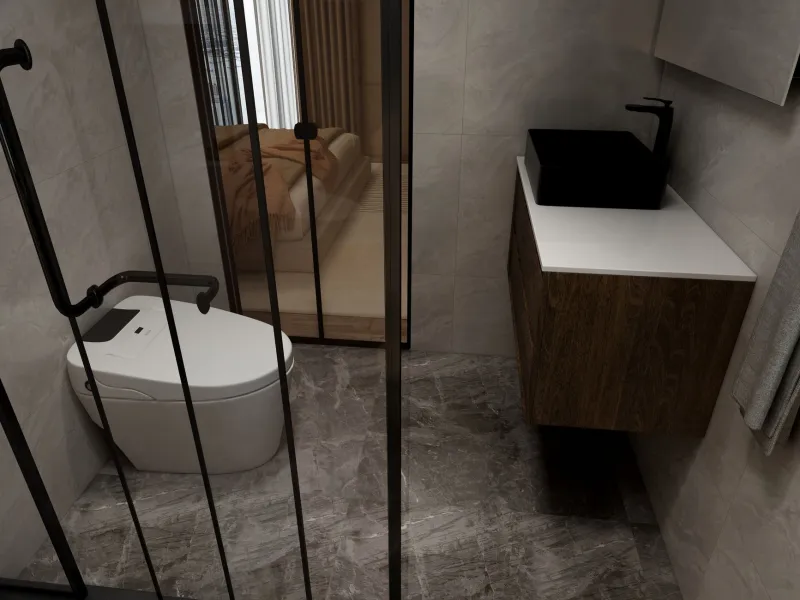
The modern luxury bathroom has become one of the most technologically sophisticated rooms in the American home. Voice-activated lighting, sensor-driven thermostats, and app-controlled shower systems have all taken their place alongside traditional fixtures. Yet perhaps no device in this space raises more complex questions than the smart mirror—a product that sees you at your most unguarded, morning and night, and increasingly remembers what it observes.
For homeowners who have embraced connected bathroom technology, the appeal is genuine. Integrated displays, personalized health readouts, facial recognition for customized lighting profiles, and skin analysis tools represent a meaningful convergence of wellness and design. But the same capabilities that make these mirrors remarkable also make them among the most data-sensitive devices in a residence. Before installing one in your primary bath, it is worth understanding precisely what you are inviting into that space.
What Smart Mirrors Actually Collect
Not all connected mirrors are created equal, and their data practices vary considerably by manufacturer and product tier. At the more basic end, a smart mirror may simply sync with a smartphone to display calendar notifications or control ambient lighting—relatively low-stakes functionality. At the more advanced end, however, certain models employ built-in cameras, infrared sensors, and machine learning algorithms capable of analyzing facial geometry, skin condition, heart rate variability, and even emotional state through microexpression detection.
These capabilities are marketed as wellness features, and in isolation, they may serve genuine health purposes. The concern arises when that data is transmitted to manufacturer servers, aggregated with user profiles, or retained beyond the duration of a single session. Unlike a fitness tracker worn on the wrist, a bathroom mirror operates in a space where users are uniquely vulnerable—unclothed, unguarded, and almost certainly not thinking about data governance.
Several manufacturers of high-end smart mirrors disclose data collection practices in lengthy terms-of-service agreements that few consumers read thoroughly. What those documents sometimes reveal is that biometric data, usage patterns, and device interactions may be shared with third-party partners for purposes ranging from targeted advertising to product development research.
The Biometric Dimension
Biometric data occupies a distinct legal and ethical category. Unlike a password or an account number, biometric identifiers—facial geometry, iris patterns, and similar markers—cannot be changed if compromised. A number of US states, including Illinois, Texas, and Washington, have enacted biometric privacy laws that impose specific obligations on companies collecting such data. California's Consumer Privacy Act also provides residents with rights around biometric information. However, enforcement is inconsistent, and the bathroom technology sector has not yet attracted the regulatory scrutiny applied to, say, medical device manufacturers.
For luxury homeowners, this creates a practical dilemma. The very features that distinguish a premium smart mirror—personalized skin analysis, health metric tracking, adaptive lighting calibrated to your facial structure—are precisely the capabilities that generate the most sensitive data profiles. Choosing a device for its sophistication means, in some cases, accepting a more extensive data relationship with the company that produced it.
Network Vulnerabilities in the Connected Bathroom
Beyond manufacturer data practices, smart mirrors introduce network security considerations that deserve serious attention. Any internet-connected device is a potential entry point for unauthorized access, and bathroom technology is frequently overlooked in home network security audits. A compromised smart mirror with an integrated camera is not merely a privacy inconvenience—it represents a meaningful physical security vulnerability.
Cybersecurity professionals who work with high-net-worth clients have noted that luxury homes, which tend to feature a higher density of connected devices, can present a broader attack surface than more modestly equipped residences. Firmware that is not regularly updated, default credentials that are never changed, and devices connected to unsegmented home networks all contribute to elevated risk.
The recommendation from security practitioners is consistent: treat your bathroom devices with the same network hygiene you would apply to a home office computer. This means placing connected bathroom fixtures on a dedicated network segment, ensuring firmware updates are applied promptly, and reviewing the privacy settings of each device individually rather than accepting factory defaults.
What Reputable Manufacturers Should Be Telling You
The most responsible manufacturers in the luxury bathroom space are beginning to differentiate themselves on privacy as a design principle rather than an afterthought. This means on-device processing for sensitive biometric functions—so that facial analysis occurs locally rather than being transmitted to a remote server—explicit opt-in consent for any data sharing, clearly written privacy disclosures that do not require a legal background to interpret, and the ability to delete stored data on demand.
When evaluating a smart mirror for a high-end installation, it is entirely reasonable to ask a manufacturer or their authorized dealer the following questions: Where is biometric data processed and stored? Is it shared with third parties, and under what circumstances? What happens to my data if the company is acquired or ceases operations? Can I use core device functions without creating an account or connecting to the internet?
A manufacturer that cannot answer these questions clearly, or that responds with vague references to their privacy policy, warrants caution regardless of how impressive the product's specifications may be.
Designing Privacy Into the Luxury Bathroom
For homeowners who wish to incorporate smart mirror technology without compromising the integrity of their most private space, a thoughtful approach to selection and installation makes a meaningful difference. Physical camera shutters—a feature offered by some manufacturers—provide a simple mechanical assurance that the device cannot capture imagery when not in active use. Positioning also matters: a mirror installed in a primary bath used exclusively by the homeowner presents a different risk profile than one in a guest suite or shared family bathroom.
Working with a design professional who has experience specifying connected bathroom systems is advisable for any high-end installation. An informed designer can help evaluate products not only on aesthetic and functional merit but on data governance practices—a dimension of specification that is rapidly becoming as important as material quality or warranty terms.
The luxury bathroom has always represented a commitment to personal sanctuary. As that space grows more intelligent, protecting its character as a refuge—from the demands of the day and, increasingly, from the reach of digital infrastructure—requires deliberate choices. The mirror that knows your face should, above all, be one you trust.